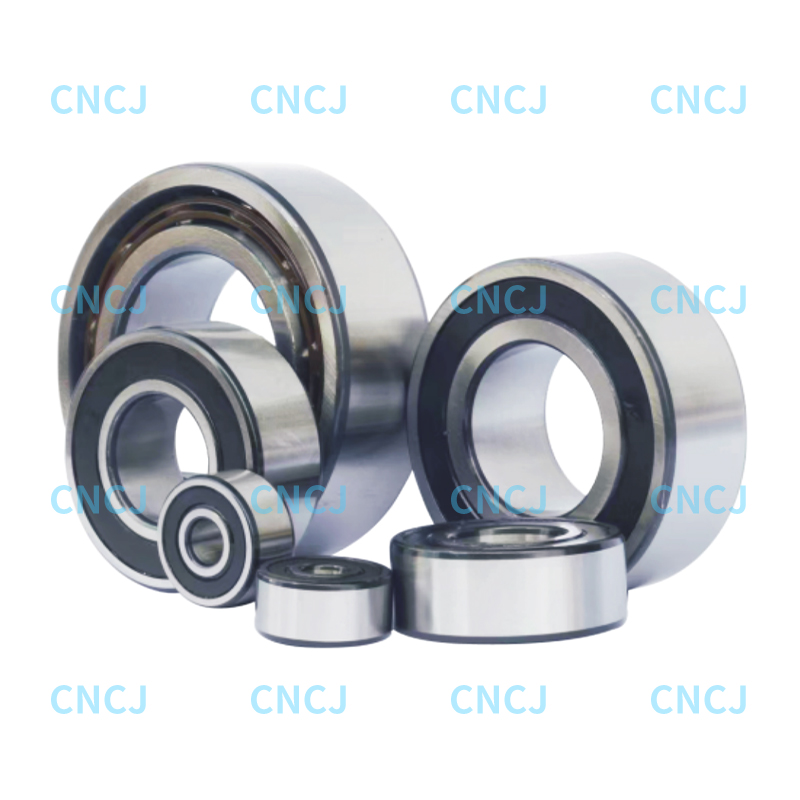
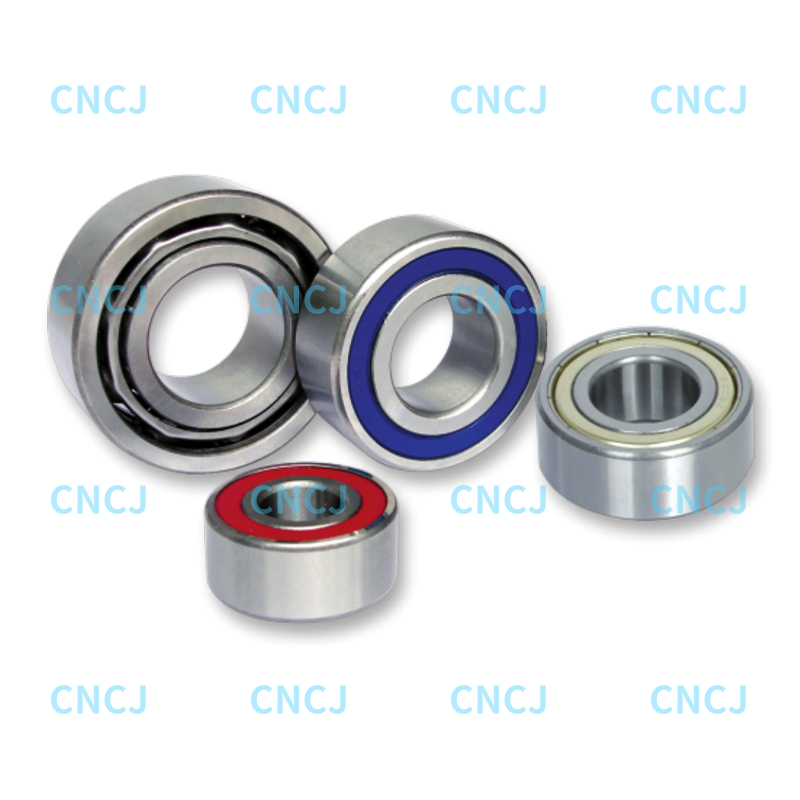
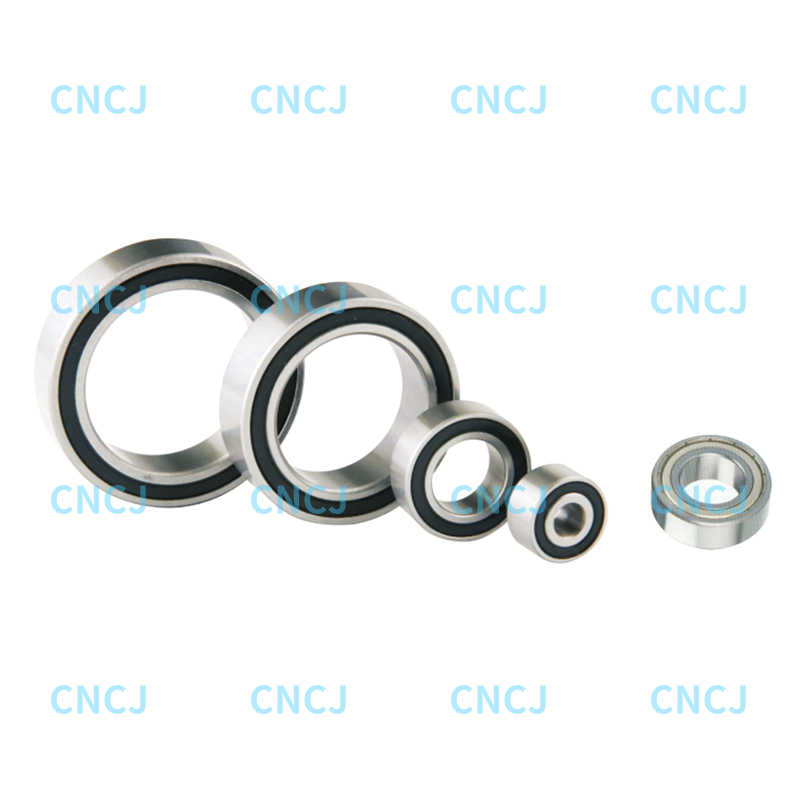
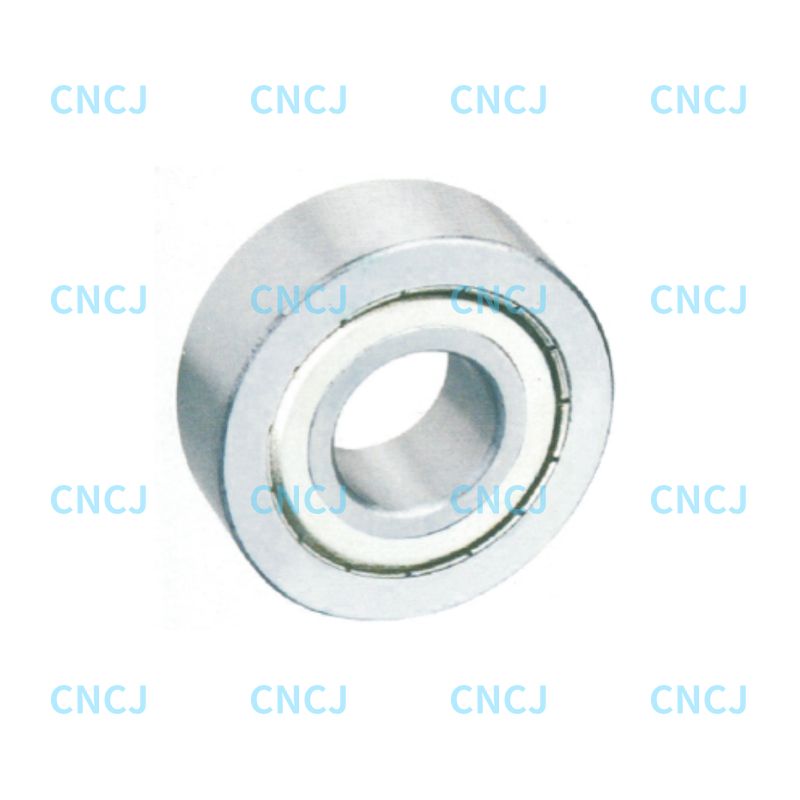
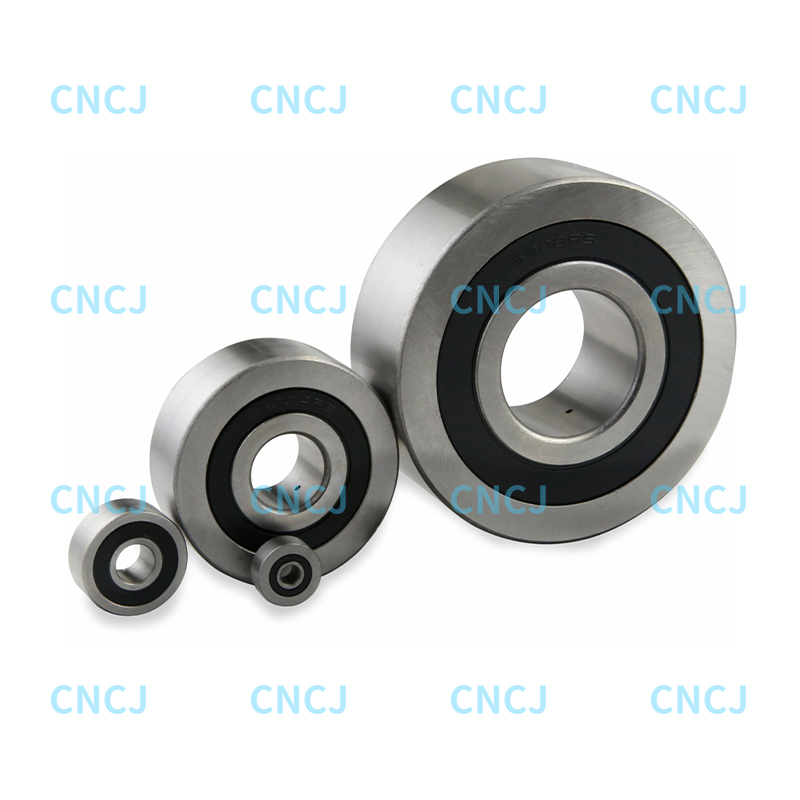
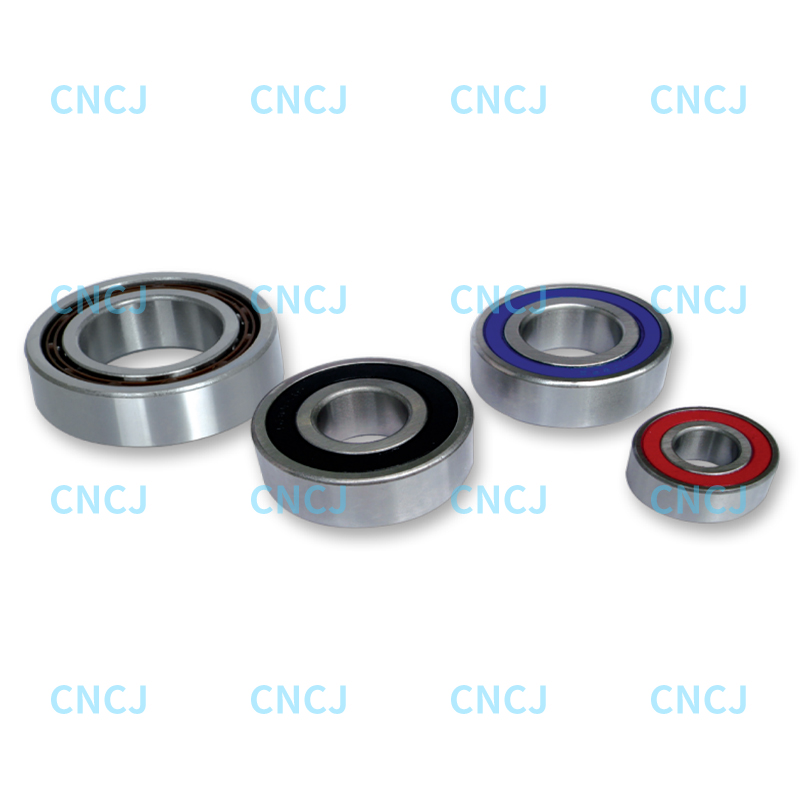
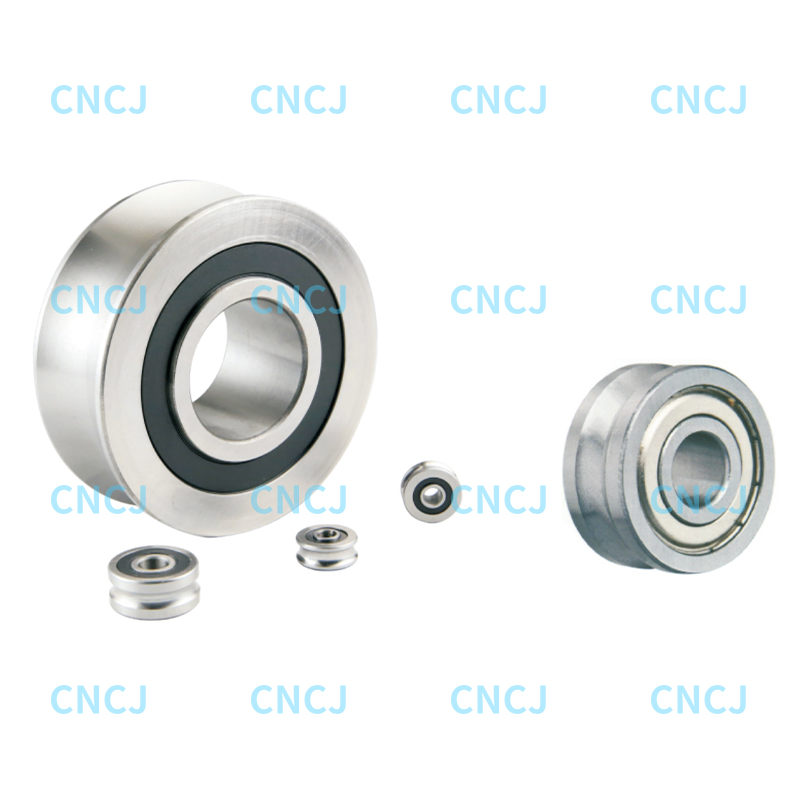
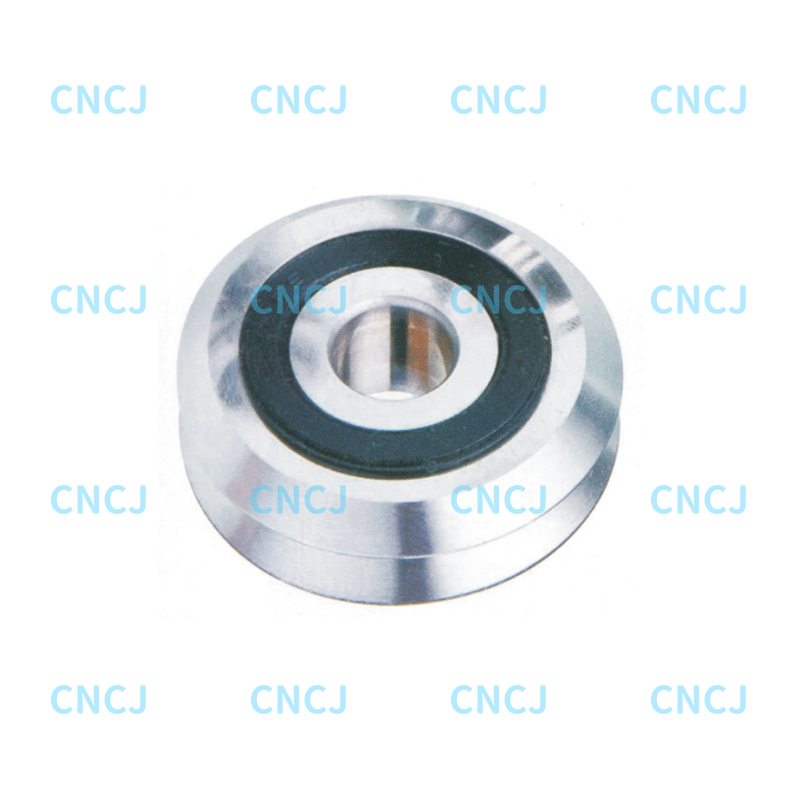
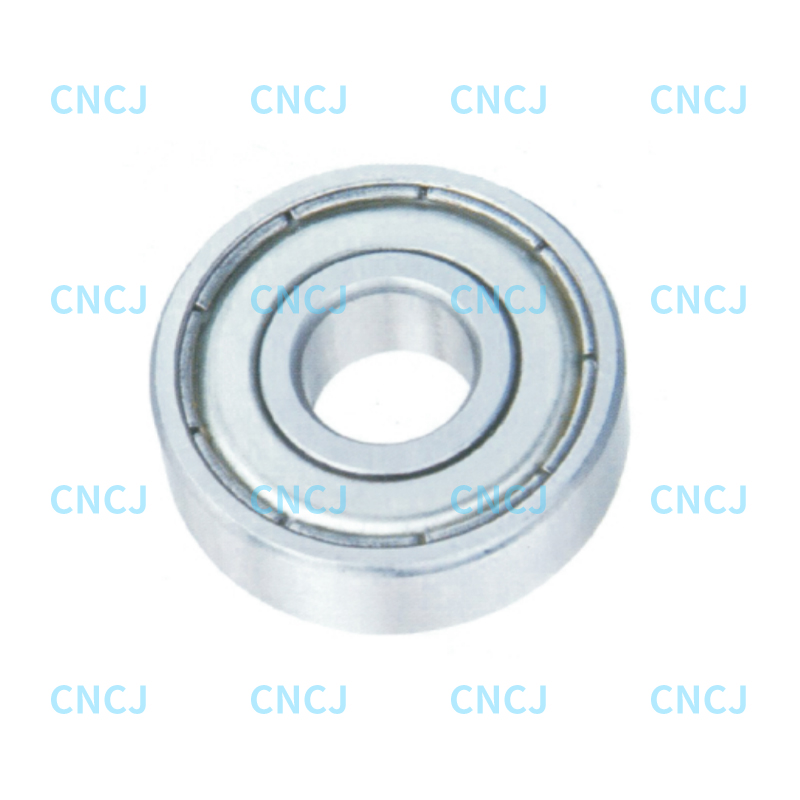
A roulement à billes à gorge profonde est un roulement à éléments roulants qui utilise des billes comme éléments roulants, placées dans des rainures profondes et continues usinées dans les bagues intérieure et extérieure. Cette conception permet au roulement de supporter simultanément des charges radiales, des charges axiales dans les deux sens et des charges combinées, ce qui en fait le type de roulement le plus largement utilisé au monde. Sa simplicité, sa polyvalence, son faible frottement, sa capacité de vitesse de rotation élevée et ses faibles exigences de maintenance en font le choix de roulement par défaut dans pratiquement toutes les industries mécaniques, des moteurs électriques et appareils électroménagers aux systèmes automobiles et machines industrielles.
Structure et composants d'un roulement à billes à gorge profonde
Un roulement rigide à billes standard se compose de quatre composants essentiels, chacun fabriqué avec précision selon des tolérances rigoureuses. Comprendre le rôle de chaque composant explique pourquoi ce type de roulement fonctionne de manière fiable dans une si large gamme d'applications.
Bague intérieure
La bague intérieure s'adapte sur l'arbre rotatif et présente une rainure profonde et incurvée sur sa surface extérieure qui fait office de chemin de roulement intérieur. Le rayon de la rainure est généralement 51,5 % à 53 % du diamètre de la boule , fournissant un contact conforme qui répartit la charge sur la surface de la balle tout en permettant un roulement à faible friction. La bague intérieure tourne avec l'arbre dans la plupart des applications.
Anneau extérieur
La bague extérieure s'insère dans l'alésage du boîtier et présente une rainure profonde correspondante sur sa surface intérieure. Il reste généralement stationnaire pendant que l'arbre et la bague intérieure tournent. La rainure du chemin de roulement de la bague extérieure reflète la géométrie de la rainure de la bague intérieure et, ensemble, elles forment la piste fermée dans laquelle roulent les billes.
Balles (éléments roulants)
Les billes sont fabriquées à partir d'acier à roulement au chrome à haute teneur en carbone (généralement de qualité GCr15/52100), d'acier inoxydable, de céramique (nitrure de silicium) ou d'autres matériaux en fonction de l'environnement d'application. Le diamètre et la quantité des billes sont déterminés par la taille du roulement : les roulements plus grands transportent des billes plus nombreuses et/ou plus grosses pour répartir la charge. Les billes entrent en contact ponctuel avec les chemins de roulement dans des conditions sans charge ; sous charge, ce contact se déforme élastiquement en une petite zone de contact elliptique qui transmet les forces appliquées.
Cage (retenue)
La cage maintient un espacement circonférentiel uniforme entre les billes, empêche tout contact bille à bille (ce qui provoquerait une usure et une chaleur importantes) et guide les billes à travers la zone de charge. Les cages sont fabriquées en acier embouti, en laiton usiné, en polyamide (nylon) ou en PEEK en fonction des exigences de vitesse, de température et de lubrification. Les cages en polyamide sont légères et silencieuses, ce qui les rend courantes dans les applications à faible bruit ; les cages en laiton sont utilisées pour les environnements à grande vitesse ou à haute température.
Sceaux et boucliers (facultatif)
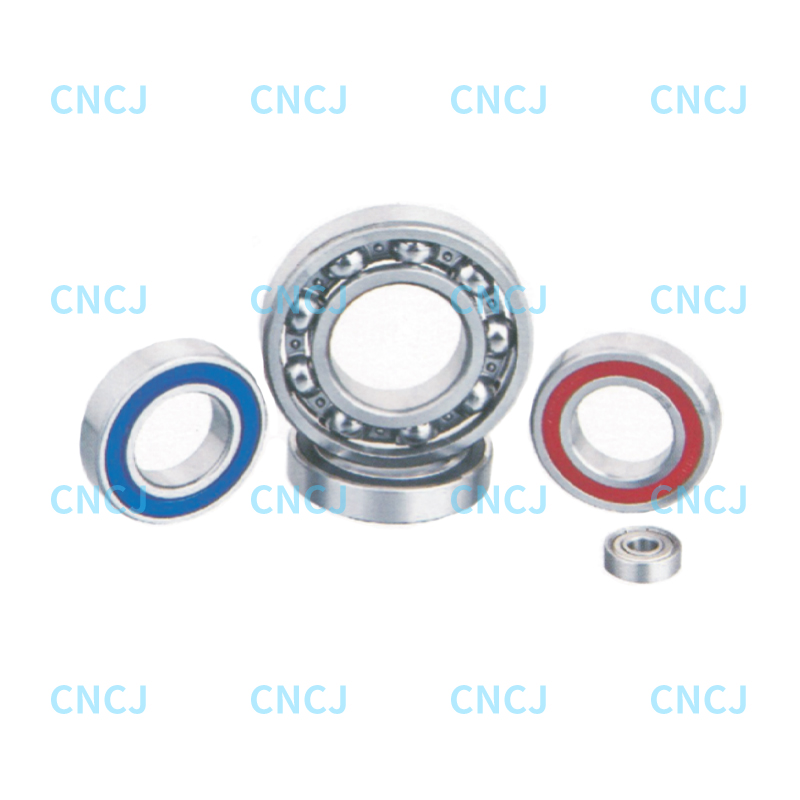
Les roulements à billes à gorge profonde sont disponibles en configurations ouvertes, à simple blindage (Z), à double blindage (ZZ), à simple étanchéité (RS) et à double étanchéité (2RS). Les boucliers métalliques fournissent une barrière sans contact qui exclut les contaminants grossiers. Les joints en caoutchouc (type à contact ou à faible contact) offrent une étanchéité supérieure contre la poussière et l'humidité et retiennent la graisse à l'intérieur du roulement. Les roulements étanches (2RS) sont pré-graissés à vie et ne nécessitent aucune relubrification dans la plupart des applications standard, ce qui simplifie considérablement la maintenance.
Comment fonctionne la conception à rainure profonde
La caractéristique déterminante de ce type de roulement est la profondeur de la rainure des deux bagues. Contrairement aux conceptions à gorge peu profonde, la géométrie profonde du chemin de roulement permet aux billes d'être placées bien en dessous de l'épaulement de la bague, ce qui confère au roulement sa capacité à supporter des charges axiales en plus des charges radiales. La hauteur d'épaulement de chaque côté du chemin de roulement agit comme une paroi qui résiste au déplacement axial des billes.
Lorsqu'une charge radiale pure est appliquée, la charge est répartie symétriquement sur le bas du roulement via plusieurs billes simultanément. Lorsqu'une charge axiale est appliquée, l'angle de contact entre la bille et le chemin de roulement augmente de zéro (radial pur) à une valeur non nulle, et l'épaulement de la rainure du chemin de roulement transmet la force axiale. La capacité de charge axiale typique d'un roulement à billes à gorge profonde est de 20 à 50 % de sa charge nominale radiale statique , en fonction de la taille du roulement et du jeu interne.
Cette capacité de charge multidirectionnelle, combinée au faible frottement de roulement du contact des billes, permet aux roulements à billes à gorge profonde de fonctionner efficacement sur une large plage de vitesses — depuis des mouvements oscillants très lents jusqu'à des vitesses de rotation très élevées dépassant 100 000 tr/min dans les roulements de précision miniatures.
Caractéristiques de performance clés
Capacité de charge
Les roulements à billes à gorge profonde sont disponibles dans une très large gamme de tailles — depuis les roulements miniatures avec des diamètres d'alésage aussi petits que 1 mm aux grands roulements industriels dépassant Diamètre d'alésage de 320 mm . Les charges dynamiques (C) et statiques (C0) évoluent en conséquence, de quelques Newtons pour les roulements miniatures à des centaines de kilonewtons pour les roulements de grande série. La durée de vie nominale du roulement (durée de vie L10 en millions de tours) est calculée à partir de la charge appliquée par rapport à la charge dynamique.
Capacité de vitesse
Parmi tous les types de roulements à éléments roulants, les roulements à billes à gorge profonde ont la capacité de vitesse la plus élevée en raison du faible frottement du point de contact bille-chemin de roulement et de la masse relativement faible des billes. Les vitesses de référence (la vitesse à laquelle la température du roulement atteint un équilibre thermique dans des conditions standard) sont spécifiées pour chaque taille de roulement dans les catalogues des fabricants. Avec une lubrification optimisée et des qualités de précision, facteurs de vitesse (n × dm) supérieurs à 1 500 000 mm·rpm sont réalisables dans les applications à grande vitesse.
Bruit et vibrations
Les roulements à billes à gorge profonde sont fabriqués selon des normes de faible bruit pour les applications nécessitant un fonctionnement silencieux, telles que les moteurs électriques, les ventilateurs, les appareils électroménagers et les équipements de bureau. Les niveaux de bruit sont caractérisés par la vitesse de vibration mesurée en mm/s (normes ABEC/ISO) ou par des tests de vibrations sur roulements (par exemple, valeurs du compteur Anderon). Les roulements de haute précision et à faible bruit pour moteurs électriques doivent généralement atteindre valeurs de vibration inférieures à 0,5 mm/s sur des plages de fréquences spécifiées.
Friction et température
Le couple de démarrage et de fonctionnement des roulements à billes à gorge profonde est faible par rapport à d'autres types de roulements supportant des charges équivalentes. Cela les rend économes en énergie, ce qui est important dans des applications telles que les moteurs électriques et les instruments de précision. Les roulements rigides à billes standard fonctionnent de manière fiable à partir de -20°C à 120°C avec lubrification à la graisse standard. Des formulations et des matériaux spéciaux permettent un fonctionnement de -60°C à 200°C ou au-delà.
Jeu interne
Le jeu interne fait référence au mouvement total de la bague intérieure par rapport à la bague extérieure dans la direction radiale avant qu'une précharge ne soit appliquée. Les groupes de jeu interne standard selon la norme ISO 5753 sont C2 (inférieur à la normale), CN (normal), C3 (supérieur à la normale), C4 et C5. Le jeu C3 est généralement spécifié pour les applications avec des tolérances d'arbre serrées ou des températures de fonctionnement élevées , où la dilatation thermique réduit le jeu de fonctionnement. Une sélection correcte du jeu est essentielle à la durée de vie des roulements et aux performances sonores.
Système de désignation standard pour les roulements à billes à gorge profonde
Les roulements à billes à gorge profonde sont désignés par un système de numérotation normalisé défini dans la norme ISO 15, qui code la taille de l'alésage du roulement, la série (dimensions de section transversale) et tous les suffixes pour le jeu interne, l'étanchéité et la qualité de précision. Comprendre ce système de désignation permet aux ingénieurs de spécifier le roulement correct et de comparer les équivalents de différents fabricants.
Tableau 1 : Significations courantes des suffixes de désignation des roulements rigides à billes. | Suffixe | Signification | Cas d'utilisation typique |
| Z/ZZ | Blindage métallique simple/double | Environnements moyennement sales ; lubrification à l'huile accessible |
| RS/2RS | Joint de contact en caoutchouc simple / double | Lubrifié à la graisse, scellé à vie ; environnements poussiéreux ou humides |
| C2/C3/C4 | Classe de jeu interne (inférieur/supérieur à la normale) | Compensation de température ; applications à ajustement serré |
| P5/P4/P2 | Qualité de précision (classe de tolérance ISO) | broches de machines-outils; instruments de précision; moteurs à grande vitesse |
| N/NR | Rainure pour circlip dans la bague extérieure / avec circlip | Implantation axiale simple dans un boîtier sans épaulement |
| M | Cage en laiton (usinée) | Applications à grande vitesse ; températures élevées |
Par exemple, la désignation 6205-2RS/C3 décrit un roulement rigide à billes à une rangée (6), série 02 (section moyenne), alésage 25 mm (05 × 5), double joint caoutchouc (2RS), avec jeu interne C3.
Séries de roulements à billes à gorge profonde et gammes de tailles
Les roulements à billes à gorge profonde sont fabriqués dans une gamme de séries de largeurs et de diamètres qui déterminent les dimensions de la section transversale par rapport au diamètre de l'alésage. La sélection de la bonne série équilibre la capacité de charge, la vitesse et l’espace d’installation disponible.
Tableau 2 : Séries de dimensions courantes des roulements à billes à gorge profonde et leurs caractéristiques. | Série | Descriptif | Plage d'alésage (mm) | Idéal pour |
| 618x / 619x | Section extra légère/fine | 1,5 à 200 | Instruments miniatures, dispositifs médicaux, espace radial limité |
| 60xx | Lumière supplémentaire | 10-150 | Moteurs légers, appareils électroménagers, vélos |
| 62xx | Lumière (le plus courant) | 10-320 | Moteurs, pompes, ventilateurs, convoyeurs à usage général |
| 63xx | Moyen/lourd | 10-320 | Charges radiales plus élevées ; boîtes de vitesses, machines agricoles |
| 64xx | Lourd | 20-180 | Capacité de charge radiale maximale pour un alésage donné |
Où sont utilisés les roulements à billes à gorge profonde
Les roulements à billes à gorge profonde se trouvent dans pratiquement tous les types de machines tournantes. Leur combinaison de polyvalence, de capacité de vitesse, de faible friction et de disponibilité dans des configurations étanches en fait le roulement de premier choix dans un éventail remarquable d'industries et d'applications.
Moteurs électriques
Les moteurs électriques – depuis les moteurs d’appareils électroménagers de faible puissance jusqu’aux grands moteurs à induction industriels – constituent le plus grand segment d’application des roulements à billes à gorge profonde. Un moteur à induction AC typique utilise deux roulements à billes à gorge profonde pour soutenir l'arbre du rotor. Le roulement à l'extrémité d'entraînement doit supporter des charges radiales et axiales combinées dues à la tension de la courroie ou au désalignement de l'accouplement ; le roulement de l'extrémité opposée à l'entraînement supporte principalement une charge radiale et est souvent ajusté librement dans le boîtier pour permettre la dilatation thermique. Des milliards de roulements rigides à billes sont installés chaque année dans des moteurs électriques dans le monde.
Applications automobiles
Dans l'industrie automobile, les roulements à billes à gorge profonde sont utilisés dans les alternateurs, les démarreurs, les pompes de direction assistée, les compresseurs de climatisation, les ventilateurs de refroidissement électriques et de nombreux systèmes auxiliaires. Une seule voiture de tourisme peut contenir 20 à 30 roulements rigides à billes à travers ses différents systèmes. Dans les véhicules électriques (VE), les roulements rigides à billes de précision sont essentiels dans les applications de moteurs d'entraînement et de réducteurs où le bruit, l'efficacité et la durée de vie sont des exigences primordiales.
Appareils électroménagers et électronique grand public
Les machines à laver, les réfrigérateurs, les climatiseurs, les aspirateurs, les outils électriques et les appareils de cuisine dépendent tous de roulements rigides à billes pour leurs composants rotatifs. Dans ces applications, un faible bruit, une longue durée de vie sans entretien et des dimensions compactes sont les principales exigences. Roulements 2RS (double étanchéité, pré-graissés) sont standard dans les appareils, car ils ne nécessitent aucun entretien sur site pendant la durée de vie prévue du produit.
Machines et équipements industriels
Les pompes, compresseurs, boîtes de vitesses, convoyeurs, ventilateurs, soufflantes, machines d'impression, machines textiles, équipements d'emballage et machines de transformation des aliments utilisent tous largement des roulements à billes à gorge profonde. Dans les environnements industriels, les roulements sont souvent de type ouvert ou blindé, permettant la relubrification, ce qui permet aux équipes de maintenance de prolonger la durée de vie des roulements grâce à un graissage périodique en fonction d'intervalles de relubrification calculés.
Machines agricoles et de construction
Les équipements agricoles tels que les moissonneuses-batteuses, les semoirs et les pompes d'irrigation utilisent des roulements à billes à gorge profonde dans les applications où la résistance à la contamination, la tolérance aux charges de choc et les longs intervalles d'entretien dans des conditions de fonctionnement à distance sont critiques. Les roulements de grandes séries (63xx, 64xx) avec des charges radiales plus élevées sont courants dans ces environnements exigeants.
Instruments de précision et équipements médicaux
Les roulements à billes miniatures et de qualité instrument (classe de tolérance ABEC 5, 7 ou 9) sont utilisés dans les pièces à main dentaires, les centrifugeuses de laboratoire, les servomoteurs, les systèmes de positionnement de précision, la robotique et les instruments de mesure. Ces roulements présentent des tolérances dimensionnelles extrêmement serrées — tolérance d'alésage de ±0,003 mm ou mieux - et sont fabriqués avec des chemins de roulement ultra-lisses et des billes adaptées avec précision pour minimiser le faux-rond et les vibrations à grande vitesse.
Roulement à billes à gorge profonde par rapport aux autres types de roulements courants
Bien que les roulements à billes à gorge profonde constituent l'option la plus polyvalente, d'autres types de roulements sont mieux adaptés à des conditions de charge ou à des environnements d'exploitation spécifiques. Le tableau ci-dessous compare les roulements à billes à gorges profondes à d'autres types de roulements fréquemment utilisés pour aider les ingénieurs à prendre des décisions de sélection éclairées.
Tableau 3 : Comparaison des roulements rigides à billes avec d'autres types de roulements courants. | Type de roulement | Charge radiale | Charge axiale | Vitesse | Tolérance de désalignement | Meilleure application |
| Boule à rainure profonde | Moyen | Modéré (dans les deux sens) | Très élevé | Faible | Usage général ; moteurs; appareils électroménagers |
| Boule de contact angulaire | Moyen–High | Élevé (une direction par roulement) | Élevé | Très faible | broches de machines-outils; pompes; charges axiales élevées |
| Rouleau cylindrique | Très élevé | Très faible / None | Élevé | Très faible | Lourd radial loads; electric motors (large) |
| Rouleau conique | Élevé | Élevé (one direction) | Moyen | Très faible | Moyeux de roues; boîtes de vitesses; charges combinées |
| Boule auto-alignante | Moyen | Faible | Élevé | Élevé (up to 3°) | Arbres longs ; mauvaises conditions d'alignement |
| Balle de poussée | Aucun | Très élevé (one direction) | Faible | Très faible | Charges axiales pures uniquement ; arbres verticaux |
Lubrification des roulements à billes à gorge profonde
Une lubrification correcte est le facteur le plus important pour atteindre la durée de vie nominale d'un roulement à billes à gorge profonde. La lubrification a quatre objectifs : réduire la friction et l'usure entre les éléments roulants et les chemins de roulement, assurer une protection contre la corrosion, agir comme un produit d'étanchéité contre la pénétration de contaminants (pour la graisse) et dissiper la chaleur générée par le fonctionnement des roulements.
Lubrification à la graisse
La graisse est le lubrifiant le plus courant pour les roulements à billes à gorge profonde. Il est facile à appliquer, reste en place sans boîtier scellé et offre de longs intervalles d'entretien. Le remplissage de graisse recommandé pour les roulements à billes à gorge profonde est généralement 25 % à 35 % du volume interne libre . Un remplissage excessif de graisse provoque un barattage, une génération de chaleur et une dégradation prématurée de la graisse, une cause fréquente de défaillance précoce des roulements. Les graisses à base de lithium (NLGI Grade 2) sont les plus utilisées ; les applications à haute température peuvent nécessiter des graisses à base de polyurée ou de PTFE.
Lubrification à l'huile
La lubrification à l'huile (bain d'huile, circulation d'huile, brouillard d'huile ou huile-air) est utilisée pour les applications à grande vitesse, dans les environnements à haute température ou lorsque le roulement est intégré dans une boîte de vitesses ou un autre boîtier rempli d'huile. L'huile assure une évacuation supérieure de la chaleur et est renouvelée en permanence dans les systèmes de circulation. Pour les applications de broche à grande vitesse, une sélection précise de la viscosité est essentielle - généralement ISO VG 15 à VG 46 pour roulements à billes — pour minimiser la traînée visqueuse tout en maintenant une épaisseur de film adéquate.
Intervalles de relubrification
Pour les roulements ouverts ou blindés (non étanches) dans les applications lubrifiées à la graisse, les intervalles de relubrification doivent être calculés à partir de la vitesse de fonctionnement, de la température et de la charge du roulement. À titre indicatif, à des vitesses et des températures modérées, les intervalles de relubrification des roulements à billes à gorge profonde vont de 3 000 à 20 000 heures de fonctionnement en fonction de la taille du roulement et des conditions de fonctionnement. Les roulements scellés (2RS) sont pré-graissés et conçus pour une durée de vie sans entretien, généralement de 10 000 à 30 000 heures dans des conditions standard.
Grades de précision et leur importance
Les roulements à billes à gorge profonde sont fabriqués selon des qualités de précision définies par les normes ISO 492 (roulements métriques) et ABEC. Chaque nuance spécifie des tolérances plus strictes sur la précision dimensionnelle, la précision de fonctionnement (voix radial et axial) et, dans certaines nuances, sur les vibrations. Des qualités de précision plus élevées sont spécifiées lorsqu'un faible faux-rond, un fonctionnement silencieux ou des performances à grande vitesse sont requis.
- P0 / ABEC 1 (normal) — Tolérance commerciale standard. Utilisé dans la majorité des applications industrielles et générales. Largement disponible et rentable.
- P6 / ABEC3 — Plus serré que la normale. Utilisé dans les applications nécessitant une meilleure précision de fonctionnement, telles que les moteurs électriques de meilleure qualité et certaines pompes.
- P5 / ABEC5 — Qualité de précision. Couramment spécifié pour les servomoteurs AC, les broches auxiliaires de machines-outils CNC et les pompes de précision. Tolérances de faux-rond environ 50 % plus strictes que P0.
- P4 / ABEC7 — Haute précision. Utilisé dans les broches principales des machines-outils, les broches de meulage et les applications d'instruments de précision. Nécessite un montage et une manipulation soigneusement contrôlés.
- P2 / ABEC9 — Ultra-précision. La classe de tolérance la plus élevée, utilisée dans les gyroscopes, les instruments de laboratoire de précision et les applications de broches à grande vitesse les plus exigeantes.
Causes courantes de défaillance des roulements à billes à gorge profonde
Comprendre pourquoi les roulements échouent est essentiel pour prolonger la durée de vie et améliorer la fiabilité des machines. La recherche et l'expérience sur le terrain indiquent que la majorité des défaillances de roulements ne sont pas causées par des défauts de matériaux, mais par des facteurs évitables liés à l'installation, à la lubrification et aux conditions de fonctionnement.
- Contamination (environ 14% des échecs) — La pénétration de particules solides, d'humidité ou de fluides corrosifs dans le roulement provoque une usure abrasive des chemins de roulement et des billes, des piqûres et une fatigue accélérée. Une bonne étanchéité et des pratiques d’installation propres sont les principales mesures préventives.
- Mauvaise lubrification (environ 36 % des pannes) — Une quantité insuffisante de graisse, un type de graisse inapproprié, un surgraissage ou une dégradation de la graisse due à la chaleur ou à l'humidité sont collectivement les principales causes de défaillance des roulements. Une sélection correcte du lubrifiant et une planification de la relubrification sont essentielles.
- Montage incorrect (environ 16 % des échecs) — Appliquer une force de montage à travers les billes plutôt qu'à travers la bague en place, utiliser des ajustements incorrects ou marteler le roulement sur un arbre provoque un effet Brinell (faux ou vrai) et des dommages au chemin de roulement qui conduisent à une défaillance précoce. Des outils et procédures de montage appropriés sont essentiels.
- Surcharge et désalignement — Le fonctionnement du roulement au-delà de sa charge nominale dynamique ou statique, ou avec un désalignement arbre/logement dépassant la tolérance du roulement, concentre les contraintes dans une petite zone du chemin de roulement, accélérant ainsi l'écaillage par fatigue.
- Passage du courant électrique — Dans les moteurs alimentés par un entraînement à fréquence variable (VFD), des courants électriques vagabonds peuvent se décharger à travers les zones de contact des roulements, provoquant des dommages caractéristiques par piqûres (cannelures) sur les chemins de roulement et les billes. Des roulements isolés ou des bagues de mise à la terre d'arbre sont utilisés pour éviter cela.
- Fatigue normale en fin de vie calculée — Environ 34 % des roulements tombent en panne par fatigue normale de contact de roulement (écaillage) au cours ou au-delà de leur durée de vie calculée L10. Il s’agit du mode de défaillance attendu lorsque tous les autres facteurs sont correctement contrôlés.
Meilleures pratiques de montage et d’installation
Une installation correcte est aussi importante que la sélection correcte des roulements. Les dommages causés lors du montage sont l'une des principales causes de défaillance prématurée, même dans le cas de roulements de haute qualité. Les pratiques suivantes doivent être suivies pour toutes les installations de roulements à billes à gorge profonde :
- Nettoyer soigneusement l'arbre et l'alésage du boîtier avant l'installation. La contamination introduite lors du montage restera à proximité du roulement tout au long de sa durée de vie.
- Vérifiez les dimensions de l'arbre et du boîtier par rapport à l'ajustement requis du roulement. Les ajustements d'arbre pour les applications de bague intérieure rotative sont généralement à interférence (k5, m5, n6) ; Les logements adaptés aux bagues extérieures fixes sont généralement des transitions ou un léger jeu (H7, J7).
- Appliquez la force de montage uniquement sur l’anneau pressé – jamais à travers les billes. Pour les ajustements serrés, utilisez un manchon de montage ou une presse hydraulique qui entre en contact uniformément avec la face de la bague. Pour les petits roulements, utilisez un outil de montage de roulement ; pour les roulements de taille moyenne à grande, utilisez le chauffage par induction pour dilater la bague intérieure avant le montage.
- Lors du montage à chaud, chauffez le roulement à un maximum de 110°C–120°C . N’utilisez jamais de flamme nue – cela pourrait surchauffer localement l’acier et dégrader son état. Les radiateurs à induction ou les bains d’huile sont les méthodes préférées.
- Après le montage, vérifiez manuellement que le roulement fonctionne correctement et qu'il n'y a pas de rugosité inhabituelle ni de points serrés. Faites fonctionner le roulement sous une charge légère initialement et surveillez la température pendant les premières heures de fonctionnement.
Matériaux utilisés dans la fabrication de roulements à billes à gorge profonde
Le choix des matériaux pour les bagues, les billes, la cage et les joints détermine directement l'enveloppe de performances du roulement, sa résistance à la corrosion et son adéquation à des environnements spécifiques.
Tableau 4 : Matériaux courants utilisés dans les composants des roulements à billes à gorge profonde et leurs caractéristiques. | Composant | Matériau standard | Matériel spécialisé | Avantage de spécialité |
| Anneaux | Acier à roulements GCr15 (52100) | Acier inoxydable 440C | Résistance à la corrosion en milieu humide ou chimique |
| Balles | Acier à roulements GCr15 (52100) | Céramique de nitrure de silicium (Si3N4) | Faibleer density (40% of steel), higher hardness, electrical insulation |
| Cage | Acier embouti / Polyamide (PA66) | Laiton (usiné) / PEEK | Élevé temp resistance; chemical resistance; high-speed capability |
| Sceaux | Caoutchouc NBR (nitrile) | FKM (Viton) / PTFE | Élevé-temperature and chemical resistance |
Ningbo Wanshun Bearing Co., Ltd. — Fabricant de roulements à billes à gorge profonde
Ningbo Wanshun Bearing Co., Ltd. est un fabricant professionnel spécialisé dans la production de roulements rigides à billes de haute précision et silencieux — en mettant l'accent sur les roulements de petite et moyenne taille — ainsi que sur les roulements à billes à contact oblique à deux rangées. La société a son siège social dans la ville de Henghe, Cixi, Ningbo, province du Zhejiang – la ville natale reconnue des roulements en Chine, une région avec une concentration industrielle établie de longue date de fabricants de roulements, de fournisseurs de matériaux et d'expertise en usinage de précision.
S'appuyant sur le vaste héritage de fabrication et les ressources techniques du pôle industriel des roulements de Ningbo, Wanshun Bearing se concentre sur la fourniture de roulements qui répondent aux exigences strictes des moteurs électriques, des appareils électroménagers, des systèmes auxiliaires automobiles et des machines de précision – où un faible bruit, une précision dimensionnelle et des performances constantes dans tous les lots de production sont essentiels à la satisfaction du client. Que vous ayez besoin de roulements standard du catalogue ou de spécifications personnalisées pour des applications spécialisées, Ningbo Wanshun Bearing fournit la qualité de fabrication et l'expertise technique pour répondre à vos exigences.
Foire aux questions sur les roulements à billes à gorge profonde
Quelle est la différence entre un roulement à billes à gorge profonde et un roulement à billes standard ?
« Roulement à billes » est un terme général qui inclut de nombreux types : à gorge profonde, à contact angulaire, à auto-alignement, à poussée et autres. Le roulement à billes à gorge profonde est le sous-type le plus courant. Sa caractéristique distinctive est la rainure profonde et continue du chemin de roulement – plus profonde que dans les conceptions à rainure peu profonde – qui lui permet de supporter des charges radiales et axiales, une capacité qui n'est pas partagée par tous les types de roulements à billes.
Combien de temps dure un roulement rigide à billes ?
La durée de vie des roulements dépend de la charge de fonctionnement, de la vitesse, de la qualité de la lubrification et des niveaux de contamination. La durée de vie L10 — le nombre de tours auquel 10 % d'un lot de roulements chargés de manière identique tomberaient en panne — est la durée de vie standard. Dans des conditions industrielles typiques, les roulements rigides à billes correctement sélectionnés et entretenus permettent généralement d'obtenir 20 000 à 50 000 heures de fonctionnement . Dans les configurations scellées et pré-graissées pour appareils électroménagers, le roulement est conçu pour durer plus longtemps que la durée de vie prévue du produit, soit 5 à 15 ans.
Un roulement à billes à gorge profonde peut-il supporter des charges de poussée (axiales) ?
Oui, c'est l'un des principaux avantages de la conception à gorge profonde par rapport aux autres types de roulements radiaux. Les épaulements profonds du chemin de roulement permettent au roulement de supporter des charges axiales dans les deux sens. Cependant, la capacité de charge axiale est limitée par rapport aux roulements à contact angulaire ou aux butées. En guise de ligne directrice générale, les charges axiales ne doivent pas dépasser 50 % de la charge nominale radiale statique du roulement (C0) , et les charges radiales-axiales combinées nécessitent un calcul minutieux de la durée de vie pour garantir une sélection adéquate des roulements.
Que signifie le « 6 » dans les désignations de roulements comme 6205 ou 6305 ?
Dans le système de désignation des roulements ISO, le premier chiffre « 6 » identifie le type de roulement en tant que roulement à billes à gorge profonde à une rangée . Les chiffres suivants codent la série de dimensions et la taille de l'alésage. Par exemple, 6205 : type 6 (DGBB), série 2 (section légère), alésage 25 mm (05 × 5). 6305 : type 6 (DGBB), série 3 (section moyenne), alésage 25 mm — physiquement plus grand en diamètre extérieur et en largeur que le 6205 pour la même taille d'alésage, et donc avec une capacité de charge plus élevée.
Un roulement 2RS est-il meilleur qu'un roulement ZZ ?
Cela dépend de l'application. Un roulement 2RS (double joint en caoutchouc) offre une étanchéité supérieure contre la poussière et l'humidité, ce qui le rend meilleur pour les environnements sales ou humides et pour une rétention de graisse scellée à vie. Cependant, les joints de contact en caoutchouc génèrent un peu plus de friction (couple de démarrage plus élevé) que les boucliers métalliques. Un roulement ZZ (double blindage métallique) a un frottement plus faible et convient mieux aux applications à grande vitesse ou lorsque le roulement se trouve dans un environnement lubrifié à l'huile. Pour la plupart des applications scellées à vie à usage général, 2RS est le choix préféré .